

Summary
As a veterinary professional in Kenya, your days are a dynamic blend of compassionate patient care, essential field visits, and the demanding realities of running a business. In this fast-paced environment, crucial information—from treatment histories and vaccination schedules to client debts and follow-up appointments—often becomes fragmented, scattered across worn notebooks, countless WhatsApp messages, and the fallible corners of your memory. This disorganization not only consumes valuable time but also introduces risks of errors, missed opportunities, and a less-than-seamless experience for both you and your clients.
What if there was a way to consolidate all your practice’s information into a single, organized, and easily accessible hub, right in the palm of your hand? The transition to digital record-keeping is no longer a distant, complex ideal but a tangible and increasingly necessary step for the modern veterinary practice. This article serves as a comprehensive guide for Kenyan animal health practitioners, offering an insightful and educational overview of how to navigate the shift from paper-based systems to efficient, app-based digital solutions. We will explore the current landscape of veterinary practice in Kenya, delve into the challenges of traditional record-keeping, and provide a clear, step-by-step approach to embracing digital tools that can revolutionize your practice, making it smarter, more professional, and ultimately more successful.
The Reality of Paper-Based Record-Keeping: Acknowledging the Pain Points
For generations, the trusty notebook and pen have been the primary tools for record-keeping in veterinary practice. While familiar and seemingly simple, this traditional method carries a heavy burden of inefficiency and risk, particularly in the demanding context of modern veterinary work in Kenya. The reliance on paper-based systems creates a series of significant pain points that can hinder a practitioner’s ability to deliver the best possible care and grow their business effectively.
One of the most immediate and frustrating challenges is the sheer disorganization and fragmentation of information. A single patient’s history might be spread across multiple notebooks, with billing information in a separate ledger, and appointment reminders jotted down on a calendar or even sent through a personal messaging app. This fragmentation makes it incredibly difficult to get a holistic view of a patient’s health or a client’s account status. When you’re in the field, trying to recall a specific treatment from a past visit, flipping through pages of a weathered notebook is not just time-consuming; it’s a recipe for error and oversight.
Furthermore, paper records are inherently prone to inaccuracies, illegibility, and incompleteness. A hastily scribbled note can be easily misread, leading to incorrect dosages or treatments. In a busy practice, it’s all too common for records to be incomplete, missing crucial details that could be vital for future diagnoses. This lack of standardized, legible data not only compromises the quality of care but also poses a significant legal and professional risk. In the unfortunate event of a dispute or a board review, incomplete or illegible records can be a veterinarian’s worst enemy, making it difficult to substantiate their actions and defend their professional integrity.
Beyond the clinical implications, the operational inefficiencies of paper-based systems are a major drain on a practitioner’s most valuable resource: time. The hours spent manually searching for records, cross-referencing information, and managing billing could be far better invested in seeing more patients, expanding service offerings, or even taking a well-deserved break. The administrative burden of a paper-based practice is a constant, low-level stressor that can contribute to burnout and limit the growth potential of the business.
Finally, paper records are static and isolated. They offer no easy way to analyze trends, track outcomes, or gain insights into the overall health of the practice. A digitized system, on the other hand, can transform your records from a passive archive into an active tool for business intelligence. Imagine being able to instantly see your most common cases, track the profitability of different services, or identify clients who are overdue for follow-up appointments. This level of insight is simply unattainable with a stack of notebooks and a filing cabinet.
The reality is that while paper has served its purpose, it is no longer sufficient for the demands of a modern, professional veterinary practice. The pain points are clear, and the need for a more efficient, reliable, and intelligent solution is undeniable. The good news is that the transition to a digital system is more accessible than ever before, offering a clear path to a more organized, professional, and successful practice.
The Digital Advantage: Unlocking Efficiency and Excellence
The shift from traditional paper-based record-keeping to digital, app-based systems offers a multitude of benefits that can fundamentally transform a veterinary practice in Kenya. These advantages extend beyond mere convenience, impacting efficiency, accuracy, client satisfaction, and ultimately, the financial health and professional standing of the practice.
- Enhanced Accessibility and Mobility
One of the most significant advantages of digital record-keeping is the unparalleled accessibility it provides. Imagine being on a field visit in a remote area, and with a few taps on your smartphone or tablet, you can instantly access a patient’s complete medical history, including past treatments, diagnoses, and medication details. This eliminates the need to carry bulky physical files and ensures that critical information is always at your fingertips, regardless of your location. This mobility is particularly crucial for Kenyan vets who often serve clients in diverse geographical settings, from urban clinics to rural farms.
- Improved Accuracy and Completeness
Digital systems are designed to minimize the inaccuracies and incompleteness inherent in paper records. With structured data entry fields, dropdown menus, and automated prompts, the likelihood of missing information or making illegible notes is drastically reduced. This leads to more accurate and comprehensive patient records, which are vital for informed decision-making, effective treatment planning, and continuity of care. Furthermore, digital records can easily incorporate photos, videos, and lab results, providing a richer and more detailed patient profile than traditional methods.
- Streamlined Workflows and Time Savings
Automating routine administrative tasks is a cornerstone of digital practice management. From appointment scheduling and reminders to invoicing and payment tracking, many processes that consume significant time in a paper-based system can be streamlined or fully automated. This frees up valuable time for veterinary professionals to focus on what they do best: patient care. Reduced administrative burden also translates to less stress and a more efficient use of staff resources, potentially allowing for more patient consultations or expanded service offerings.
- Enhanced Data Security and Compliance
While paper records are vulnerable to loss, damage, or unauthorized access, digital systems offer robust security features. Cloud-based solutions, in particular, provide secure storage, regular backups, and access controls, protecting sensitive client and patient information. This not only safeguards your practice against data loss but also helps in complying with data protection regulations, which are becoming increasingly important. In the event of a natural disaster or theft, digital records stored securely off-site ensure business continuity and peace of mind.
- Better Financial Management and Client Relations
Digital platforms often integrate billing and invoicing features, making it easier to track client debts, generate professional invoices, and manage payments. This leads to improved financial oversight and reduced revenue leakage. Moreover, the ability to quickly access client information, communicate effectively, and provide transparent records fosters stronger client relationships. Clients appreciate the professionalism and efficiency of a digitally managed practice, which can lead to increased trust and loyalty. - Powerful Insights and Business Growth
Perhaps one of the most underestimated benefits of digital record-keeping is its potential to unlock powerful business insights. With all your data digitized, you can easily generate reports on common diseases, treatment efficacy, client demographics, and financial performance. This data-driven approach allows you to identify trends, optimize services, make informed business decisions, and strategically plan for growth. For instance, analyzing treatment outcomes for specific conditions can help refine protocols, while understanding peak service times can inform staffing decisions.
In essence, embracing digital solutions is not just about adopting new technology; it's about adopting a more intelligent, efficient, and resilient way of practicing veterinary medicine. It's about empowering Kenyan vets to deliver higher quality care, manage their businesses more effectively, and confidently step into the future of animal health.
The Digital Transition: A Practical Roadmap for Kenyan Vets
Transitioning from a familiar paper-based system to a new digital platform might seem daunting, but with a structured approach, it can be a smooth and rewarding process. This section outlines a practical roadmap for Kenyan veterinary practitioners to embrace digital record-keeping, drawing inspiration from successful models and best practices.
Step 1: Assess Your Needs and Choose the Right Digital Partner
Before diving into any specific app or software, take stock of your practice’s unique requirements. Consider:
- Practice Size and Type: Are you a solo practitioner, a small clinic, or a mobile vet serving a large rural area? Your needs will vary.
- Key Pain Points: What are the biggest frustrations with your current system? (e.g., lost records, billing issues, difficulty tracking follow-ups).
- Budget: Digital solutions come with varying price points. Determine what you can realistically invest.
- Connectivity: Assess your internet access reliability, especially if you operate in remote areas. Some apps offer offline capabilities.
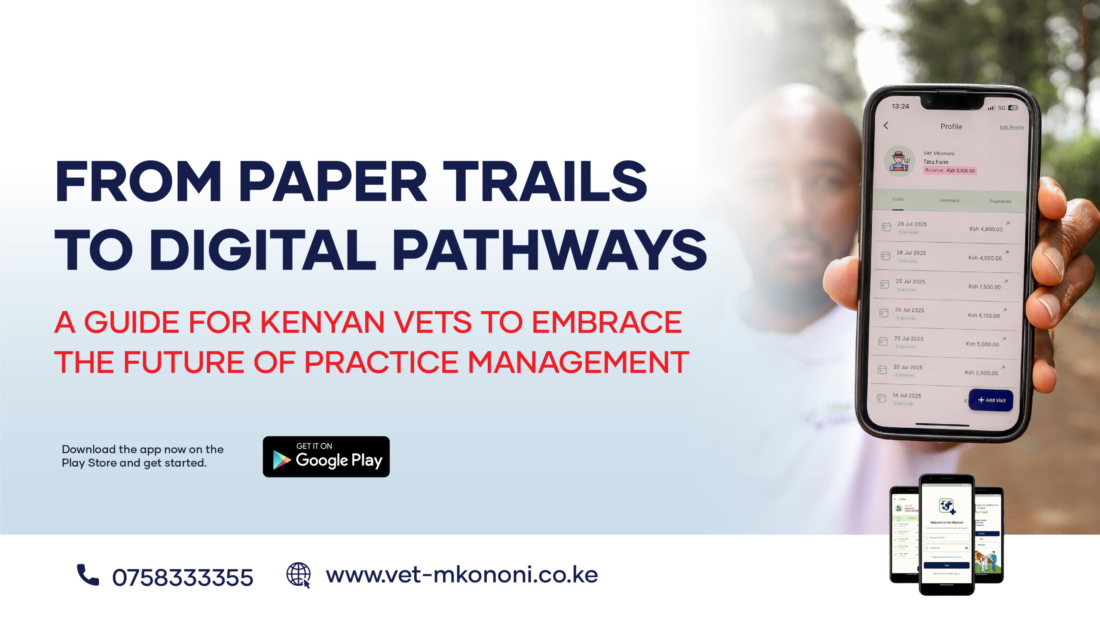
Once you have a clear understanding of your needs, research available digital solutions. Look for platforms specifically designed for veterinary practices, ideally with features relevant to the Kenyan context. Platforms like Vet Mkononi, mentioned in the initial prompt, are examples of solutions built with veterinary professionals in mind. Evaluate features such as client and patient management, appointment scheduling, billing, inventory, and reporting. Prioritize user-friendliness and good customer support.
Step 2: Start Small: Pilot and Populate Essential Data
It’s not necessary to digitize your entire practice overnight. A phased approach is often more manageable and less disruptive. Begin by populating the most critical and frequently accessed data:
- Download the App and Create Your Account: This is the foundational step. Familiarize yourself with the interface and basic functionalities.
- Transfer Active Client Contacts: Start with your current, active client base. Import their contact details from your phone or existing lists into the app. This immediately makes your most frequent interactions more efficient.
- Link Clients to Animals: For each client, create profiles for their animals, noting species, breed, age, and any unique identifiers. This forms the core of your digital patient records.
This initial phase allows you to get comfortable with the system without being overwhelmed. Focus on making the new system work for your daily, active cases.
Step 3: Gradually Digitize Older Records and Historical Data
Once you’re comfortable with managing new cases digitally, you can begin the process of migrating older, historical records. This can be done gradually:
- Prioritize by Activity: Focus on digitizing records for active patients first. For older, inactive patients, you can digitize their records on demand when they return for a visit.
- Scan or Manually Enter: Depending on the volume and format of your old records, you might choose to scan important documents (e.g., lab results, referral letters) and attach them to digital patient files, or manually enter key historical data points (e.g., vaccination history, major surgeries) into the structured fields of your app.
- Archive Physical Records: Once digitized, physical records can be securely archived, reducing clutter and ensuring a backup.
This gradual approach ensures that your practice continues to operate smoothly while you build a comprehensive digital history. Over time, your entire practice history becomes searchable, accessible, and a valuable resource for data analysis.
Step 4: Optimize Workflows and Embrace Digital Habits
With your essential data in the app, it’s time to integrate digital record-keeping into your daily workflow:
- Record Instantly: The next time you service a client, make it a habit to record all details directly into the app. This includes treatment notes, diagnoses, medications dispensed, and any follow-up instructions. This eliminates the need for paper notes that then need to be transcribed later.
- Utilize All Features: Explore and leverage other features of your chosen app, such as appointment scheduling, automated reminders, inventory management, and billing. The more you integrate these features, the more efficient your practice becomes.
- Train Your Team: If you have staff, ensure they are adequately trained on the new system. Consistent usage across the team is crucial for success.
- Regular Backups and Security: While most cloud-based apps handle this automatically, always be aware of your data backup and security protocols. Ensure strong passwords and multi-factor authentication are in place.
Step 5: Leverage Data for Insights and Growth
With a robust digital record-keeping system in place, you can now harness the power of your data:
- Generate Reports: Use the app’s reporting features to analyze trends in disease prevalence, treatment efficacy, client demographics, and financial performance.
- Identify Opportunities: Data can reveal opportunities for new services, targeted marketing campaigns, or areas where your practice can improve efficiency.
- Enhance Client Communication: Use the organized data to send personalized reminders for vaccinations, deworming, or routine check-ups, strengthening client relationships.
By following these steps, Kenyan veterinary practitioners can confidently transition to a digital record-keeping system, transforming their practice into a more organized, efficient, and professional enterprise. The future of veterinary medicine is digital, and embracing this change is an investment in the long-term success and sustainability of your practice.
Conclusion: Embrace the Digital Evolution for a Thriving Practice
The journey from paper-laden desks to streamlined digital interfaces marks a significant evolution for veterinary practices worldwide, and especially for the dynamic landscape of animal health in Kenya. The challenges posed by traditional record-keeping—disorganization, inaccuracies, time inefficiency, and limited insights—are no longer insurmountable obstacles. With the advent of accessible and intuitive digital solutions, Kenyan veterinary professionals now have an unprecedented opportunity to elevate their practices.
Embracing digital record-keeping is not merely about adopting new technology; it is about investing in the future of your practice. It’s about enhancing the quality of patient care through readily available, accurate information. It’s about optimizing your precious time, allowing you to focus more on healing and less on administrative burdens. It’s about building stronger, more transparent relationships with your clients, fostering trust and loyalty. And crucially, it’s about empowering your business with data-driven insights that can fuel growth, identify opportunities, and ensure long-term sustainability.
The transition, as outlined in this guide, can be as simple as 1, 2, 3: download the app, transfer your active contacts, and gradually digitize your older records. Start small, build momentum, and witness firsthand how your practice becomes smarter, faster, and more professional. The digital pathway is clear, and the benefits are profound. Take the first step today and join the growing number of Kenyan vets who are revolutionizing animal health, one digital record at a time.
Add a Comment
You must be logged in to post a comment